
Dimensioning and weighing
Capture weight, dimensions and dispatch data in one connected process, for cartons, parcels, pallets and goods moving through warehouses, logistics and dispatch.
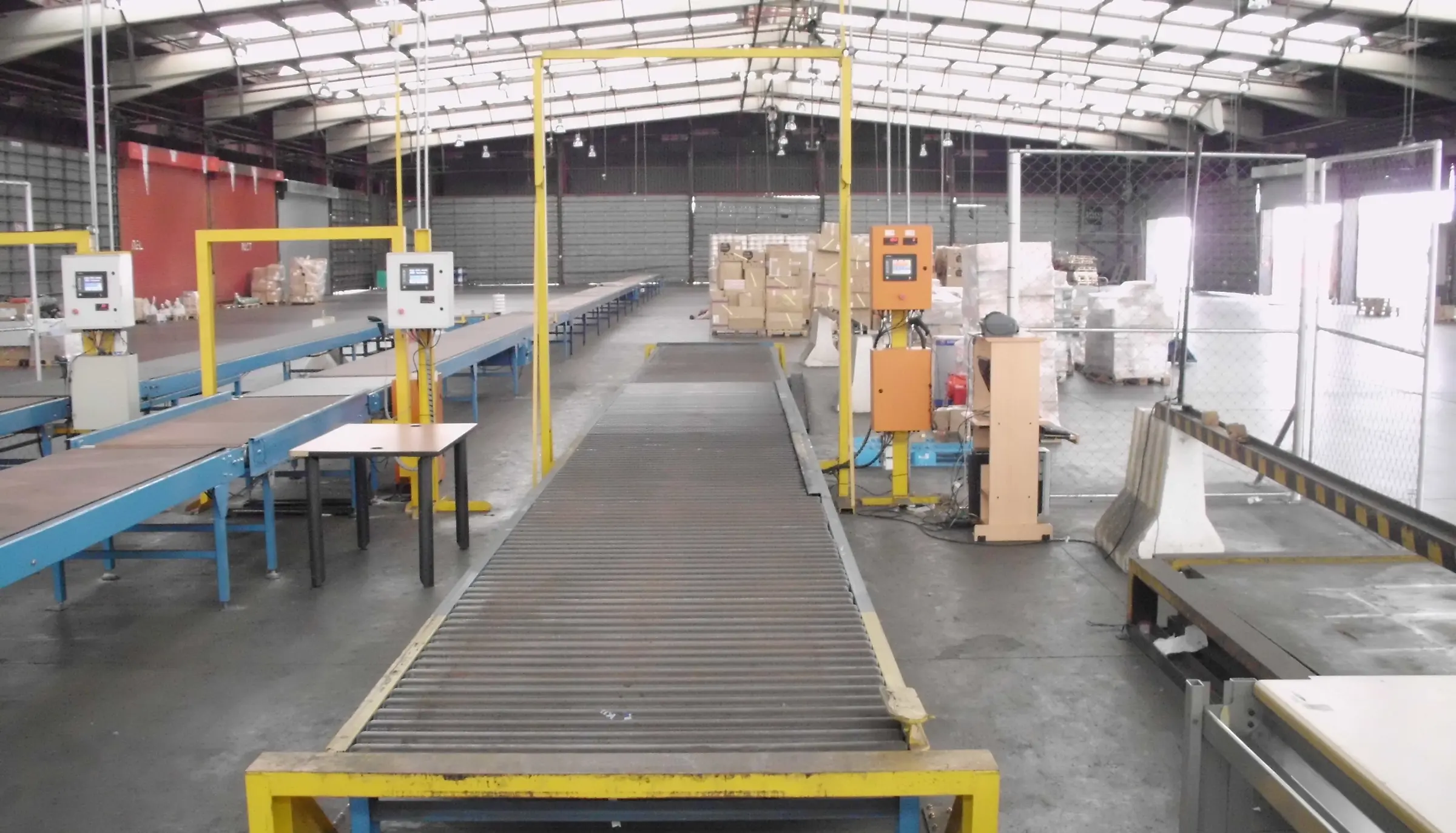
From scan to shipment
A dimensioning and weighing system gives your team a structured way to capture the physical and transactional data behind each item, carton, pallet or consignment.
Identify
Scan or identify the item, carton, pallet, batch, order or consignment before measurement begins.
Weigh
Capture accurate weight data using the required scale or weighing point.
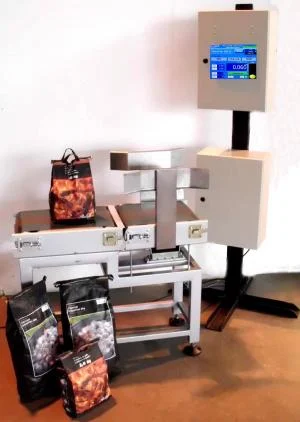
A weighing conveyor and control panel. Dimension
Record physical dimensions for logistics planning, shipping cost control and inventory traceability.
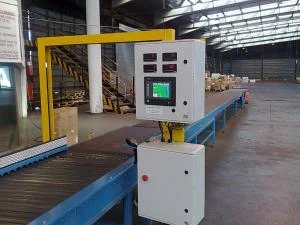
A dimensioning gantry over a conveyor. Image
Where required, capture an image linked to the transaction for added proof and accountability.
Validate
Check that the required information has been captured before the item continues through the workflow.
Label
Generate or apply the required label, barcode or identification reference where labelling is part of the process.
Store
Link captured weight, dimensions and identification data to the correct stock, order or transaction record.
Dispatch
Send goods forward with a stronger record of weight, dimensions, identification and movement history.
SWAD specification
The Multi-Dimensioner measures with LED light-curtain arrays and weighs with load cells, in-line on a conveyor, and a full-colour touchscreen display means no PC is needed at the machine. Figures from Multi-Weigh's published Multi-Dimensioner (SWAD Machine) product sheet; ask the team for the current specification for your site.
| Model | Parcel SWAD | Pallet SWAD |
|---|---|---|
| Length | 5 cm to 130 cm | 5 cm to 150 cm |
| Width | 5 cm to 90 cm | 5 cm to 180 cm |
| Height | 5 cm to 90 cm | 5 cm to 240 cm |
| Resolution | 1 cm | 1 cm |
| Weighing capacity | 50.0 kg | 2,000 kg |
| Increments | 0.2 kg | 1.0 kg |
- Measuring
- Light-curtain arrays
- Weighing
- Load cell
- Data output
- RS-232-C bi-directional, RS485, FTP or Modbus TCP
- Power
- 380 VAC, three phase
- Conveyor direction
- One direction as standard, bi-directional as an option
Quoted around your hardware, workflow and environment
Some businesses need a static dimensioning station. Others need cube dimensioners, scales, scanners, label printers, cameras, ERP connections, inventory integrations or track-and-trace workflows. The quote depends on what must be captured, where the system will be installed and how the data needs to move through your operation.
Includes
- Initial consultation
- Workflow and requirements review
- Hardware requirement planning
- Software and system scope definition
- Dimensioning and weighing process planning
- Barcode, label or transaction workflow planning
- Integration planning, where required
- A quotation based on the hardware and implementation scope
Excludes
- Hardware
- Scales and checkweighers
- Static dimensioners or cube dimensioners
- Barcode scanners
- Label printers
- Cameras or imaging equipment
- RFID hardware
- ERP or inventory system integration
- Track-and-trace integrations
- On-site installation
- Hardware installation
- Travel and accommodation, where applicable
Accurate measurement, traceability and dispatch control
Dimensioning and weighing captures the data that often gets missed in manual dispatch, logistics or warehouse processes.
Capture accurate physical data
Static dimensioners
Capture the physical dimensions of goods, so teams record accurate size data for logistics, inventory and dispatch.
Cube dimensioners
Capture dimensional data where cubic measurements are needed for storage, logistics or freight decisions.
Integrated weighing
Combine dimension capture with weighing, so every measured item is linked to both its size and its weight.
Strengthen traceability and transaction proof
SWAD: scan, weigh, dimension and image
Scan, weigh, dimension and image in one process, linking identification, weight, physical dimensions and image proof in one transaction record.
Serialised transaction records
Link each scan, weight, dimension and image to a serialised transaction, for a clear record of what was processed.
Imaging support
Where required, image capture creates a visual reference linked to the item, carton, pallet or consignment.
Improve logistics, dispatch and reporting
Shipping cost control
Dimension and weight data give teams more accurate shipping information and less uncertainty in freight calculations and dispatch planning.
Inventory traceability
Captured dimension and weight records improve the traceability of goods moving through warehouse, logistics or dispatch.
Operational reporting
Turn measurement activity into reports on what was scanned, weighed, dimensioned and dispatched.
Measurement hardware, connected to operational software
Dimensioning and weighing works best when the data captured on the floor reaches the systems your team uses every day.
- Barcode scanners and label printers
- ERP and inventory management systems
- RFID and track-and-trace systems
Measurement data you can use
The system should do more than capture numbers. It should give teams the information to plan, verify, dispatch and resolve queries with confidence.
Measurement reports
Weights and dimensions by item, carton, pallet, consignment or transaction.
Dispatch reports
What was measured and processed before goods left the facility.
Transaction records
Scan, weight, dimension and image information linked to a serialised transaction.
Exception reports
Missing data, unusual weights, incorrect dimensions or records that need review.
Inventory reports
Dimension and weight data behind inventory visibility and movement records.
Management reports
Measurement activity, dispatch readiness and operational flow.
Freight accuracy, dispatch confidence and inventory traceability
Capturing physical data before goods move further through the operation supports better logistics planning, clearer dispatch records and stronger traceability.
Capture more accurate freight data
Use weight and physical dimensions for better shipping and logistics information.
Improve dispatch confidence
Clear records of what was scanned, weighed, dimensioned and processed.
Strengthen inventory traceability
Link measurement data to the right product, carton, pallet, order or transaction.
Reduce manual measurement errors
Move away from disconnected manual measurements.
Support customer query resolution
Use transaction records and image proof to answer disputes or delivery queries.
Improve revenue protection
Identify, weigh, dimension and image goods, each data point linked to a serialised transaction.
“The MWT system has streamlined the way we capture stock movement, simplified data input and helped minimise user errors. It is so simple and easy to use that anyone can operate it. We now have accurate stock reports, on time, every time.”
For dimensioning and weighing, your solution is not treated as an isolated device: Multi-Weigh connects the measurement point to the identification, labelling, inventory, dispatch and reporting around it.
Clients and case studiesFor movement-heavy operations
- Warehousing and distribution
- Logistics and freight
- E-commerce and retail logistics
- Fresh produce logistics
- Industrial manufacturing
- Dispatch and fulfilment centres
Dimensioning and weighing questions
What is a dimensioning and weighing system?
A connected system that captures product weight and physical dimensions, for logistics accuracy, inventory traceability and dispatch records.
What is the difference between weighing and dimensioning?
Weighing captures mass. Dimensioning captures physical measurements such as size or cubic data. Together they give a complete view of the goods being moved.
What does SWAD mean?
SWAD stands for scan, weigh, dimension and image, in one process.
Can the system capture images?
Yes. Where required, image capture can be included so a photo is linked to the serialised transaction.
Can it connect to scanners and label printers?
Yes. Multi-Weigh solutions can connect with barcode scanners and label printers where required.
Can it integrate with ERP or inventory systems?
Yes. ERP and inventory management integrations can be planned where required.
Is pricing standard?
No. Pricing depends on the hardware, workflow, installation environment, integrations and reporting requirements.
Which industries use dimensioning and weighing systems?
Warehousing, logistics, freight, e-commerce, retail logistics, manufacturing, fresh produce logistics and dispatch operations.
Elsewhere on the line
- NutLoggerNut processing ERP and traceability
- Check-weighingAutomated check-weighing systems
- DimensioningYou are here
- PackhousePackhouse management system
- WarehouseWarehouse management system
Measure it. Weigh it. Prove it.
Speak to Multi-Weigh about your warehouse, logistics or dispatch workflow. The team will help define the right mix of dimensioning hardware, weighing equipment, software and integrations.